
It was as much a human history trip as a natural history one. Creswell Crags, on the Derbyshire-Nottinghamshire boundary not far from Clumber Park, form an attractive
narrow limestone gorge containing a lake and caves on both the northern and southern sides. These caves were occupied by our human predecessors during the last Ice Age
between 43,000 and 10,000 years ago, probably on a temporary basis as the ice advanced and retreated. And before them, there is evidence that Neandertal people lived here up to
60,000 years ago.
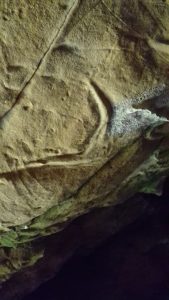
One cave in particular, Church Hole Cave, contains the only example of cave art in the UK, and it was this cave that attracted many of our party to sign up for a guided tour. Depictions
of a bison, a deer and a bird, possibly an ibis, were pointed out to us by our guide. They were not particularly easy to discern, but they were definitely there and it was a great thrill
to see them. Perhaps they had been etched on the rock by a very early Creswell Crags Field Naturalist!
But it was the current natural history of the Crags and surrounding area that we had also come to see. Birds were not particularly abundant, not even a single ibis, but welcome sightings did include buzzard, goldcrest and nuthatch. The warm sunny weather did, however, encourage many insects to take to the wing, with nine different varieties of butterflies seen in all, including brimstone, comma, painted lady and green-veined white. A common darter and common hawker, and some 5-spot ladybirds, were also noted.
At this time of the year fruits and nuts were appearing in abundance in the hedgerows and woodland edges, including rosehips, blackberries (delicious!), elderberries, guelder rose, wild strawberries, sloes, horse and sweet chestnuts and hazelnuts. Perhaps they had tempted out some of the mammals that were spotted, such as a fox, a field vole and a woodmouse.
The insects we saw were probably also tempted out by the prospects of sweet nectar from the huge variety of flowering plants that were seen in the fields, hedges and woods around the Crags. Over 50 varieties of flora were identified during the day, including many less common species such as the (aptly named) pellitory-on-the-wall, black nightshade, musk thistle, hop trefoil, and rough hawkbit. There were also many of the more common species noted, such as bird foot trefoil, hedge woundwort, yarrow, herb robert, harebell and many more.

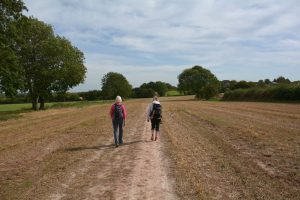
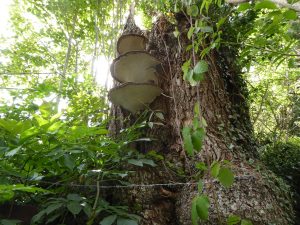
The Crags visitor centre museum provided much useful information about the area and the people who once lived here, and the centre’s café provided the traditional Field Nats end-
of-trip tea and cake before starting our homeward journey.
Rick Cowley